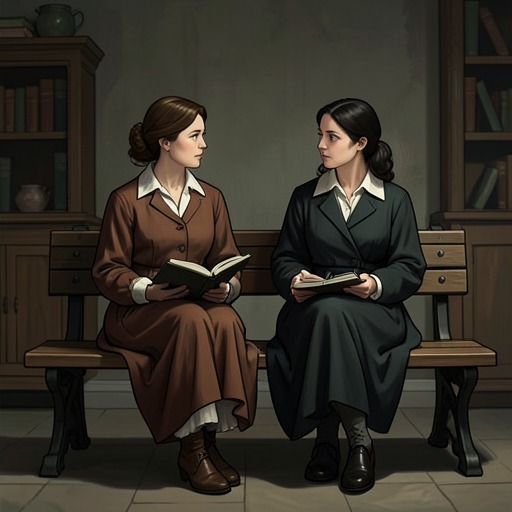
Tessa Young and Steph Jones’s friendship after betrayal
After We CollidedTessa Young and Steph’s friendship after betrayal is defined by a difficult gap between wanting to forgive and being ready to trust again. Tessa misses Steph even while feeling betrayed by her, and a reunion allows their closeness to re-emerge without resolving the hurt. The friendship’s tentative repair also makes Tessa confront the uneven standards she applies to forgiveness and the importance of connections beyond her relationship with Hardin.
Rupture and the question of fairness
Tessa’s feelings toward Steph are divided rather than settled. While getting ready to go out, Tessa chooses a maroon dress she wore to her first fraternity party with Steph. The dress brings that shared history close, but it does not make the present conflict disappear: Tessa misses Steph and remains angry with her. The combination of attachment and resentment makes the dress a marker of both their earlier closeness and the distance that has since opened between them.
Tessa also recalls Steph’s argument that it was unfair to forgive Hardin while withholding forgiveness from her. Tessa admits that Steph was right in at least some respects. This does not mean Tessa’s sense of betrayal has vanished, or that she has already decided to restore the friendship. Instead, she recognizes a tension in her own response: she is willing to make room for Hardin’s wrongdoing and change, yet finds it difficult to extend comparable understanding to Steph. Her self-questioning gives the conflict a moral dimension without reducing it to a simple choice between forgiving and rejecting her friend.
Missing Steph, and friendship beyond the couple
Before the evening out, Steph remains present in Tessa’s thoughts even though the two are apart. Tessa tells Hardin that she misses Steph, then asks whether he misses his own friends. Hardin says he would rather spend his time with Tessa; she answers that he could still spend time with his friends, too. The exchange places Tessa’s friendship with Steph within a broader question about whether romantic closeness should replace other attachments. Tessa’s answer resists that substitution: being together need not require withdrawing from friends.
The moment also clarifies that Tessa’s longing for Steph is not merely a passing memory of their earlier life. She is looking for a way to acknowledge the injury and the continuing value of the friendship at the same time. The evidence does not specify the details of Steph’s betrayal, so the basis of Tessa’s hurt remains less fully described here than the emotional conflict it creates. What is clear is that missing Steph has not ended Tessa’s anger, and that the two feelings coexist as she considers meeting her again.
The reunion
At the gathering, Steph greets Tessa enthusiastically, compliments her appearance, and hugs her. Steph tells her she is glad she came. Tessa finds the encounter awkward, but not as difficult as seeing Molly, and recognizes how much she has missed Steph. She hopes the evening will go smoothly enough for them to explore rebuilding their friendship. Her hope is deliberately tentative: coming together again makes repair possible, but does not establish that the previous breach has been settled.
Later, Hardin tells Tessa that Steph seemed very happy to see her. Tessa agrees that she could tell, while continuing to say that she is upset about what happened. Yet the evening has changed the emotional terms of the encounter. Tessa has laughed and joked with Steph, and for the first time feels that she may be able to put the conflict behind her and move forward with her. That feeling marks a real opening, though not a declaration that she has fully forgiven Steph or that trust is completely restored.
A friendship still in progress
The friendship’s movement is therefore measured in small, observable changes: Tessa chooses to attend, accepts Steph’s warmth, admits that she has missed her, and leaves room for a future conversation and renewed closeness. None of these gestures cancels Tessa’s anger. Their significance lies in allowing affection and grievance to remain present together rather than requiring one to erase the other before contact can resume.
Steph’s return to Tessa’s social world also complicates the tendency to treat her relationship with Hardin as the only bond that matters. Tessa can want closeness with Hardin and still miss Steph; she can recognize Hardin’s preference to spend his time with her and still insist that he may maintain friendships of his own. The reunion does not supply a final resolution, but it turns the possibility of rebuilding from an abstract hope into something they have begun to test in person.